
Why Does My Law Firm Need an IOLTA?

These records must include all deposit and withdrawal documentation, individual client ledgers, bank statements, and reconciliation reports. Many states conduct random audits of attorney trust accounts, and firms must be prepared to produce complete records upon request. IOLTA accounts are a useful way to keep client funds separate from a law firm’s operating expenses while benefiting the community.
Integrating IOLTA Management with Practice Management
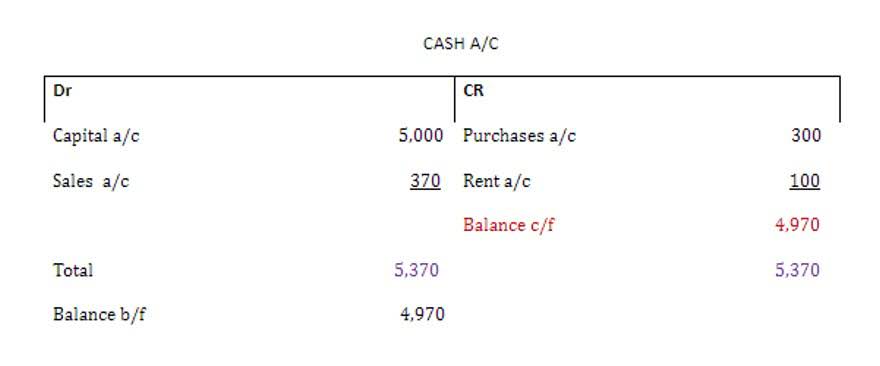
Most larger financial institutions will have the ability to open Balancing off Accounts and maintain an IOLTA account for you. Interest belongs to the IOLTA program, not to clients or the firm, and must not distort client balances or reconciliation totals. The adjusted bank balance must match the trust account master ledger exactly.

An example of IOLTA accounting in action
Every dollar earned strengthens the legal system’s fairness and what does iolta stand for accessibility. You’ll never again have to worry about an account being out of balance, or money being allocated to an account when it shouldn’t have been. If you’re just starting out and think you’ve set up your accounting the wrong way, talk to a professional accountant with experience dealing with IOLTA. Learn how to build, read, and use financial statements for your business so you can make more informed decisions. The magic happens when our intuitive software and real, human support come together.
- Setting up such accounts can be lengthy, and the attorney in charge of the funds must physically visit the bank to initiate the account creation process.
- Even if you have an excellent accounting department, keeping all the accounting functions moving in a smooth and efficient manner can be challenging without the right accounting software to help.
- We’ve implied that mixing client money with a firm’s operating funds can lead to serious legal consequences.
- Here’s what Doris’ individual ledger would look like after the transaction we mentioned above.
- However, most jurisdictions allow a small firm-owned buffer (often $100–$200) solely to cover bank service charges so client funds are never used to pay fees.
- The first step is to identify the issue by reviewing your records thoroughly.
- Remember, a law firm can not benefit from any interest that is earned on any client funds, regardless of whether or not they are funds that are pooled together, or being held in their own, individual accounts.
Select your account type
In summary, attorneys play a critical role in managing IOLTAs, and they must adhere to strict ABA regulations and ethical standards. By implementing diligent bookkeeping practices and prioritizing their fiduciary responsibilities, attorneys can successfully manage IOLTA accounts and contribute to access to justice for those in need. Ensure ongoing compliance by maintaining accurate records, reconciling the account regularly, and fulfilling any reporting requirements set by your state bar association. Before setting up an IOLTA account, familiarize yourself with the rules and regulations governing IOLTA accounts in your jurisdiction. These rules are typically set by state bar associations or regulatory bodies and outline how client funds should be handled.
- A client trust account is simply money that is to be used for firm expenses related to that client’s case.
- An IOLTA (Interest on Lawyers’ Trust Account) is a special type of trust account used to hold short-term or nominal client funds that cannot practically earn interest for the individual client.
- If your IOLTA account needs cleanup, reconciliation, or systematic management, Accounting Atelier specializes exclusively in law firm bookkeeping – including trust accounting for firms with complex IOLTA requirements.
- Lawyers must stay informed about IOLTA regulations, as non-compliance can lead to disciplinary actions.
Comparison: IOLTA Accounts vs. Operating Accounts

The core principle is segregation—personal, business, and client funds must never be co-mingled. Every dollar in an IOLTA account belongs to clients and must be accounted for separately. Each state bar sets guidelines for when lawyers must maintain an IOLTA account. These rules often hinge on whether the funds can reasonably earn net interest for the individual client. If not, they must be placed in an IOLTA account, where the interest earned supports legal aid.
While QuickBooks may be less expensive, it doesn’t offer https://swallowbd.com/paid-in-arrears-meanings-and-steps-to-manage-it/ comprehensive legal practice solutions like CosmoLex. This full-service legal accounting solution includes matter cost accounting, trust accounting, and built-in compliance safeguards. Prior to the establishment of IOLTA in the U.S. in 1981 –when Florida became the first state bar association to adopt the system –federal law required law firms to place client money in non-interest bearing checking accounts. After IOLTA, law firms could deposit these funds in interest-bearing checking accounts. The interest is then pooled and forwarded by the fiduciary to the state’s IOLTA board for distribution to legal aid programs and related charities. All attorneys must complete an assessment of their client trust account management practices.
An IOLTA account, or Interest on Lawyers’ Trust Accounts, plays a very important role in legal practice. If you’re wondering what is an IOLTA account, it’s a type of trust account that lawyers use to hold client funds. These accounts are designed to manage small or short-term funds that don’t generate enough interest to benefit individual clients. Instead, the interest earned from these accounts goes to fund legal services for low-income individuals, making it a great tool for promoting access to justice.
They have since generated billions of dollars for legal aid services, helping to fund pro bono representation, domestic violence assistance, and other essential legal resources for underserved populations. One primary utilization of the funds generated through IOLTAs is grants for legal aid offices and pro bono programs. In fact, more than 90% of IOLTA grants awarded (approximately $168 million in 2020) were allocated to these types of services1. This funding has a significant impact on enabling legal service organizations to better serve their communities. Law firms, through their use of IOLTA accounts, participate in corporate social responsibility efforts, contributing to societal well-being and the public good. Engaging in IOLTA programs enhances the public perception of the legal profession as one that is dedicated to upholding justice and supporting those in need.